
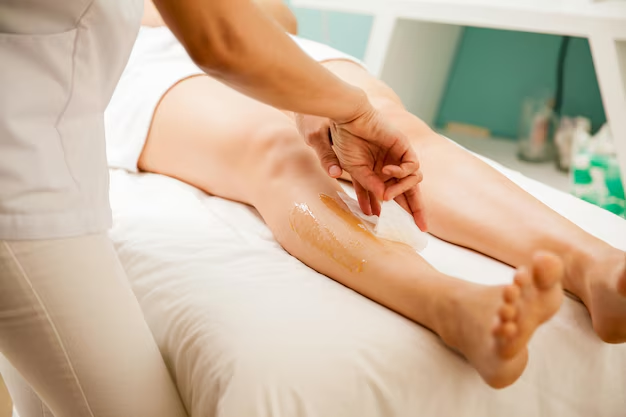
Whether it’s your first waxing appointment or your twentieth, understanding waxing pain areas across the body can help you prepare, reduce discomfort, and walk out feeling confident every time.
At Wax & Lash Denver, we’ve helped thousands of clients navigate waxing pain across every body area. This guide breaks it all down so you know exactly what to expect.
Why Does Waxing Pain Vary by Body Area?
Not all skin is created equal — and that’s the root reason why a leg wax feels so different from a bikini wax. Two major factors drive the variation: skin thickness and nerve density, and hair coarseness.
Skin Thickness and Nerve Density Explained
Skin thickness varies across the body. Areas like the legs and arms have thicker, tougher skin with fewer concentrated nerve endings near the surface, which is why waxing there tends to feel more like a quick sting. Contrast that with the bikini line or underarms, where skin is significantly thinner and packed with a higher density of nerve endings — pulling hair from these zones sends a much stronger pain signal to the brain.
Mucous membrane-adjacent areas (like the Brazilian zone) are especially sensitive because the skin there is delicate by design. Even experienced waxing clients feel a noticeable difference when transitioning from their legs to their bikini line.
How Hair Coarseness Affects Pain Level
Coarse, thick hair requires more force to pull from the follicle, which naturally increases discomfort. This is why the first few waxes anywhere tend to hurt more — the hair is at its coarsest before regular waxing begins to thin and weaken the follicle over time. Areas with naturally coarser hair (underarms, bikini line) tend to be more uncomfortable than areas with finer hair (forearms, face).
The good news: with consistent waxing every 4–6 weeks, hair grows back finer and sparser, and pain levels drop noticeably over time.
Most Painful Areas During Waxing
Brazilian and Bikini Area Waxing Pain
The Brazilian and bikini area consistently ranks as the most painful waxing zone. There are several reasons for this:
- Thin, sensitive skin with a high concentration of nerve endings
- Coarse hair that requires more pull force to remove
- Proximity to mucous membranes, which are inherently more sensitive
- Hormonal sensitivity — the area can feel more reactive depending on your cycle (more on that below)
A Brazilian removes all hair in the pubic region, front to back, while a bikini wax targets the sides and top. Both are more intense than other areas, but most clients describe it as a sharp, brief sting rather than sustained pain — especially in the hands of a skilled esthetician.
Pro tip: Avoid scheduling a Brazilian wax in the days leading up to or during your menstrual cycle, when sensitivity in this area peaks.
Underarm Waxing Pain
The underarms are a close second on the pain scale. The skin here is thin and folded, which makes it harder to pull taut — and proper skin tension is one of the most important techniques for minimizing waxing pain. The hair also tends to grow in multiple directions, which can require multiple passes and increase discomfort.
Despite the intensity, underarm waxing is quick. Most clients are surprised by how fast the process is — what feels intimidating is usually over in under a minute per side.
Pro tip: Raise your arm and rest your hand behind your head to help your esthetician stretch the skin flat. This one simple position can meaningfully reduce pain.
Upper Lip and Facial Waxing Pain
The upper lip is consistently ranked among the most painful facial areas to wax, despite being a small zone. Facial skin — especially around the mouth — is thin and richly innervated. Many clients experience watery eyes or a reflexive flinch even on their tenth upper lip wax. That’s just the nervous system doing its job.
Other facial areas like the chin and sides of the face are slightly less intense, but all facial waxing carries a sharper sensation than body waxing because of how sensitive facial skin tends to be.
Pro tip: Avoid facial waxing if you’re using retinol, tretinoin, or other exfoliating actives — these thin the skin and significantly increase sensitivity and risk of lifting.
Moderately Painful Waxing Areas
Back and Chest Waxing
Back and chest waxing falls into the moderate pain category. The skin here is thicker than the bikini or underarm zone, but the hair tends to be coarser — particularly on the chest. Large surface areas also mean more time in the chair and more cumulative sensation, even if each individual strip isn’t especially painful.
For clients waxing their back or chest for the first time, the surprise is usually that it’s far more manageable than expected. Think of it as a series of sharp flicks — uncomfortable but very tolerable.
Eyebrow Waxing
Eyebrow waxing lands in the moderate zone for most people. The skin around the brows is thin, but the area being waxed at any one time is very small, which keeps the sensation brief. Most clients experience a quick sting followed by mild redness that fades within an hour.
The main concern with eyebrow waxing isn’t pain — it’s precision. This is one area where professional technique matters enormously, since over-waxing can alter your brow shape significantly.
Least Painful Waxing Areas
Legs and Arms Waxing
Legs and arms are where most people feel most comfortable with waxing — and often where first-timers start. The skin here is thicker, nerve endings are less concentrated near the surface, and the hair is typically finer than in bikini or underarm areas.
Full leg waxing does take longer than other services, but the sensation is usually described as a mild sting or pulling feeling. Many clients find it easy to zone out or chat through the whole appointment. Arms follow a similar pattern — fine hair, lower sensitivity, minimal discomfort.
Waxing Pain by Area — Quick Comparison Chart
| Body Area | Pain Level | Why |
|---|---|---|
| Brazilian / Bikini | ★★★★★ High | Thin skin, dense nerve endings, coarse hair |
| Underarms | ★★★★☆ High | Thin folded skin, multi-directional hair growth |
| Upper Lip | ★★★★☆ High | Delicate facial skin, highly innervated |
| Chest / Back | ★★★☆☆ Moderate | Coarser hair, larger surface area |
| Eyebrows | ★★☆☆☆ Low-Moderate | Thin skin but very small area |
| Arms | ★★☆☆☆ Low | Thicker skin, finer hair |
| Legs | ★★☆☆☆ Low | Thicker skin, fewer surface nerve endings |
How Your Hormone Cycle Affects Waxing Pain
Here’s something many people don’t realize: your menstrual cycle has a direct effect on waxing pain, particularly in hormone-sensitive areas like the bikini zone.
In the days immediately before and during your period, estrogen and progesterone levels shift significantly. This hormonal fluctuation can heighten skin sensitivity and lower your pain threshold — making the same wax feel noticeably more intense than it would mid-cycle.
The ideal time to wax? Days 8–20 of your cycle (counting from the first day of your period), when estrogen is rising and your body’s natural pain tolerance is at its highest.
This doesn’t mean you can’t wax during your period — many clients do, especially for legs or arms where hormonal sensitivity is less of a factor. But if you have the flexibility, timing your Brazilian or bikini wax to mid-cycle can make a real difference.
How to Reduce Pain in Each Area
Waxing will always involve some level of discomfort, but there are concrete steps you can take to minimize it — before, during, and after your appointment.
Before your appointment:
- Let hair grow to at least ¼ inch (about the length of a grain of rice). Too short and the wax can’t grip properly; too long and it hurts more. Trim if needed.
- Exfoliate gently 24–48 hours before your appointment to clear away dead skin and help hair release more easily.
- Stay hydrated — well-hydrated skin is more supple and tends to respond better to waxing.
- Take an OTC pain reliever (like ibuprofen) 30–45 minutes before your appointment if you’re sensitive, particularly for Brazilian or underarm waxing.
- Avoid caffeine and alcohol on the day of your appointment — both can increase skin sensitivity.
- Skip retinol and acids for at least 3–5 days before facial waxing.
During your appointment:
- Breathe deeply and exhale as the strip is pulled — tensing up increases pain perception.
- Communicate with your esthetician. A good waxer will work with your comfort level.
- Trust the technique. Proper skin stretching is the single most effective pain-reduction tool your esthetician has.
After your appointment:
- Avoid heat (hot showers, saunas, sun exposure) for 24–48 hours in sensitive areas.
- Apply a soothing, fragrance-free lotion or aloe vera gel to calm the skin.
- Exfoliate regularly between appointments to prevent ingrown hairs.
Professional Waxing in Denver — Why Technique Matters
Pain isn’t just about body area — how the wax is applied and removed makes an enormous difference. Inexperienced or rushed technique is one of the leading causes of unnecessary pain, bruising, and skin reactions.
At Wax & Lash Denver, our estheticians are trained in proper skin tension technique, correct wax temperature management, and efficient removal that minimizes repeat passes over the same area. We use high-quality hard and soft waxes selected specifically for each body zone — hard wax for sensitive areas like the bikini line and underarms (it grips the hair rather than the skin), and soft wax for larger areas like legs and back.
First-time clients especially benefit from professional expertise. When you’re nervous, you tend to tense up — our team knows how to help you relax and move through the appointment comfortably and efficiently.
If you’re in Denver and ready to book, or have questions about which services are right for you, contact us or book your appointment online.
FAQs
Which areas are most painful during waxing?
The Brazilian and bikini area, underarms, and upper lip are consistently the most painful waxing zones. These areas share a common trait: thin skin with a high density of nerve endings close to the surface, combined with coarser hair that requires more force to remove.
Which body part hurts most during waxing?
For most people, the Brazilian (full pubic area removal) is the most painful waxing service. The combination of extremely sensitive skin, proximity to mucous membranes, coarse hair, and hormonal sensitivity during certain cycle phases all contribute to higher discomfort levels in this zone.
Is underarm waxing more painful than leg waxing?
Yes, significantly. Underarm skin is much thinner and more sensitive than leg skin, and the hair typically grows in multiple directions, which can require additional passes. Leg waxing, by comparison, is considered one of the least painful waxing services.
Why does bikini waxing hurt more?
Bikini and Brazilian waxing hurt more because the skin in the pubic region is considerably thinner and more nerve-dense than other body areas. It’s also closer to hormone-sensitive tissue, meaning pain perception there is heightened — especially in the days before and during your menstrual cycle.
Does waxing pain vary from person to person?
Absolutely. Individual pain tolerance, skin type, hair coarseness, hydration levels, stress, and hormonal status all affect how much waxing hurts. What one person describes as barely noticeable, another finds quite intense in the same area. Consistent waxing over time generally reduces pain as hair becomes finer and follicles weaker.
Which areas are least painful for waxing?
The legs and arms are the least painful areas to wax for most people. Thicker skin, lower nerve density near the surface, and typically finer hair all contribute to a much milder experience. These are great starting points for anyone new to waxing who wants to build their comfort level before moving to more sensitive areas.
Ready to book your waxing appointment in Denver? The team at Wax & Lash Denver is here to make your experience as comfortable and effective as possible — whatever area you’re getting waxed. Book online today.